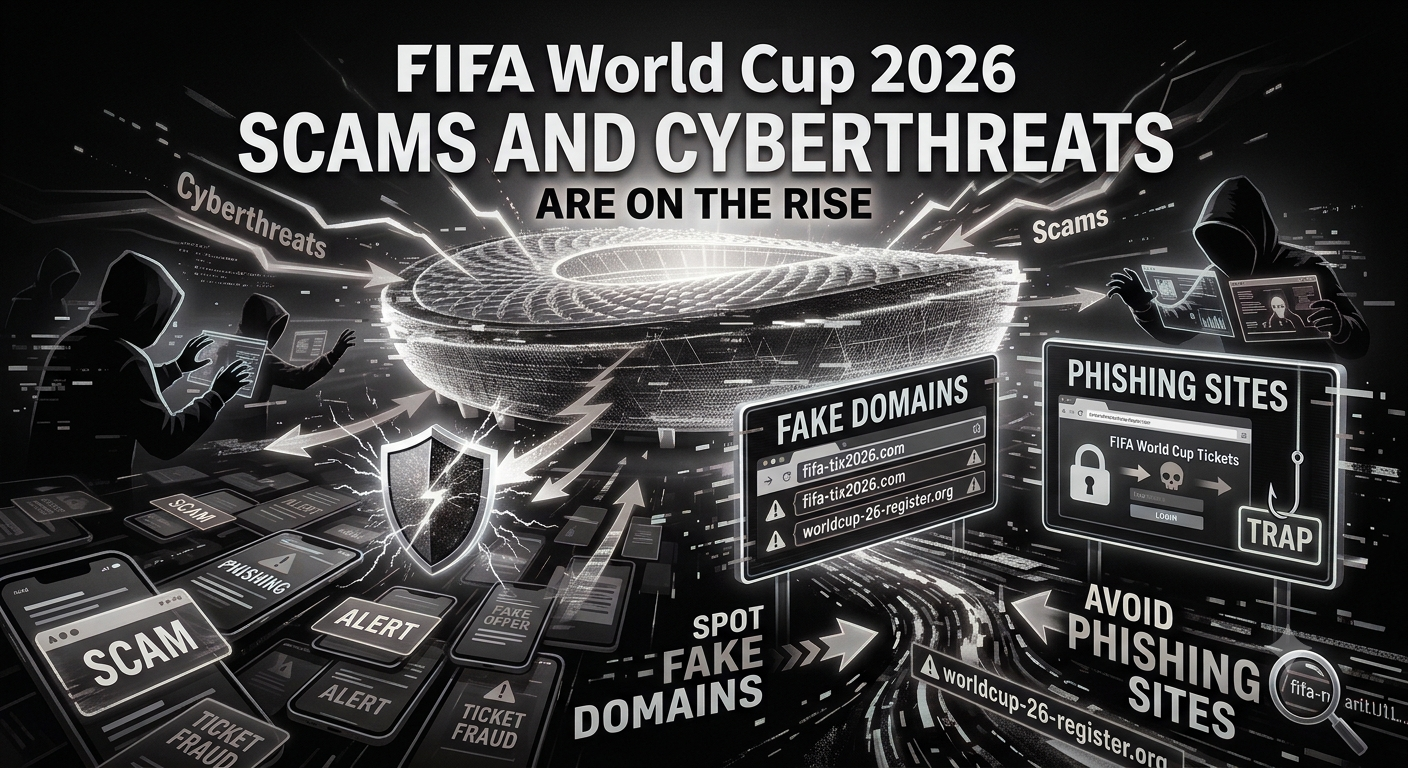
The FIFA World Cup 2026, the largest edition of the tournament to date, is already facing a surge in cyber threats. With billions of expected viewers and matches across the United States, Canada, and Mexico, attackers are leveraging fake FIFA-affiliated domains to deceive users through phishing and financial fraud. Following an FBI warning, but several malicious websites are still operational, demonstrating how cybercriminals are exploiting the event earlier and more aggressively than ever before.
Inside FIFA World Cup 2026 Scams: How Cybercriminals Target Victims
According to the FBI, threat actors are exploiting FIFA World Cup excitement by launching fraudulent websites that closely imitate www.fifa.com. These malicious sites are built to steal personally identifiable information (PII), including names, addresses, phone numbers, email IDs, banking details, and payment card information. Beyond data theft, they also facilitate fake ticket sales, counterfeit hospitality packages, fraudulent employment offers, and various financial scams. The attackers commonly use typosquatting, where domains differ from the legitimate website by only a single letter, extension, or punctuation mark, making them difficult to distinguish. Professional-looking layouts, FIFA branding, and realistic tournament content further increase their credibility. The FBI has warned users to avoid suspicious domains such as
fifa[.]cab, fifa[.]pink, fifa[.]blue, fifa[.]pub, FIFA[.]city, Fifa[.]bio, fifa[.]beer, fifa[.]click, fifa[.]cam, fifa[.]ceo, fifa[.]help, filfa[.]org, fifa-online[.]com, fifa-2026[.]xyz, jobs-fifa[.]com, fifa-hr[.]com, fifa-careerhub[.]com, fifaworldcup-careers[.]com, fifa-hiring[.]com, fifahiring[.]com, fifa-ticket[.]live, and fifastore.us[.]com. [BOLD]
Beware of Fake FIFA Ticketing, Hospitality and Sales Websites
Among the malicious domains, ww-fifa[.]com stands out for its sophisticated impersonation of FIFA's official website. By simply removing one "w" from the genuine URL, attackers create a convincing typosquatting domain that can easily deceive unsuspecting users. The fraudulent site mirrors the appearance of an official FIFA World Cup 2026 portal, complete with authentic-looking branding, menus, ticketing information, and hospitality services. It promotes premium packages offering tickets, refreshments, lounge access, and related perks, with the sole purpose of defrauding visitors.
Avoiding FIFA World Cup 2026 Ticket Fraud
The FBI advises football fans to adopt safe browsing habits when looking for FIFA World Cup 2026 tickets or viewing options.
Rather than clicking links from search engines or messages, manually enter www.fifa.com into your browser and ensure the URL is accurate before sharing any details.
Users should also avoid sponsored search results, revisit FIFA websites through saved bookmarks, and navigate to FIFA subdomains only via the official homepage.
Websites displaying low-quality branding, broken images, or copied content should be treated as suspicious and avoided.
Following these safety measures can help users avoid FIFA World Cup 2026 ticket price scams. Attackers frequently lure victims with heavily discounted tickets, exclusive hospitality deals, and time-sensitive promotions that appear too good to miss. By creating artificial urgency, they encourage fans to act impulsively and complete payments without confirming that the seller or website is genuine.