
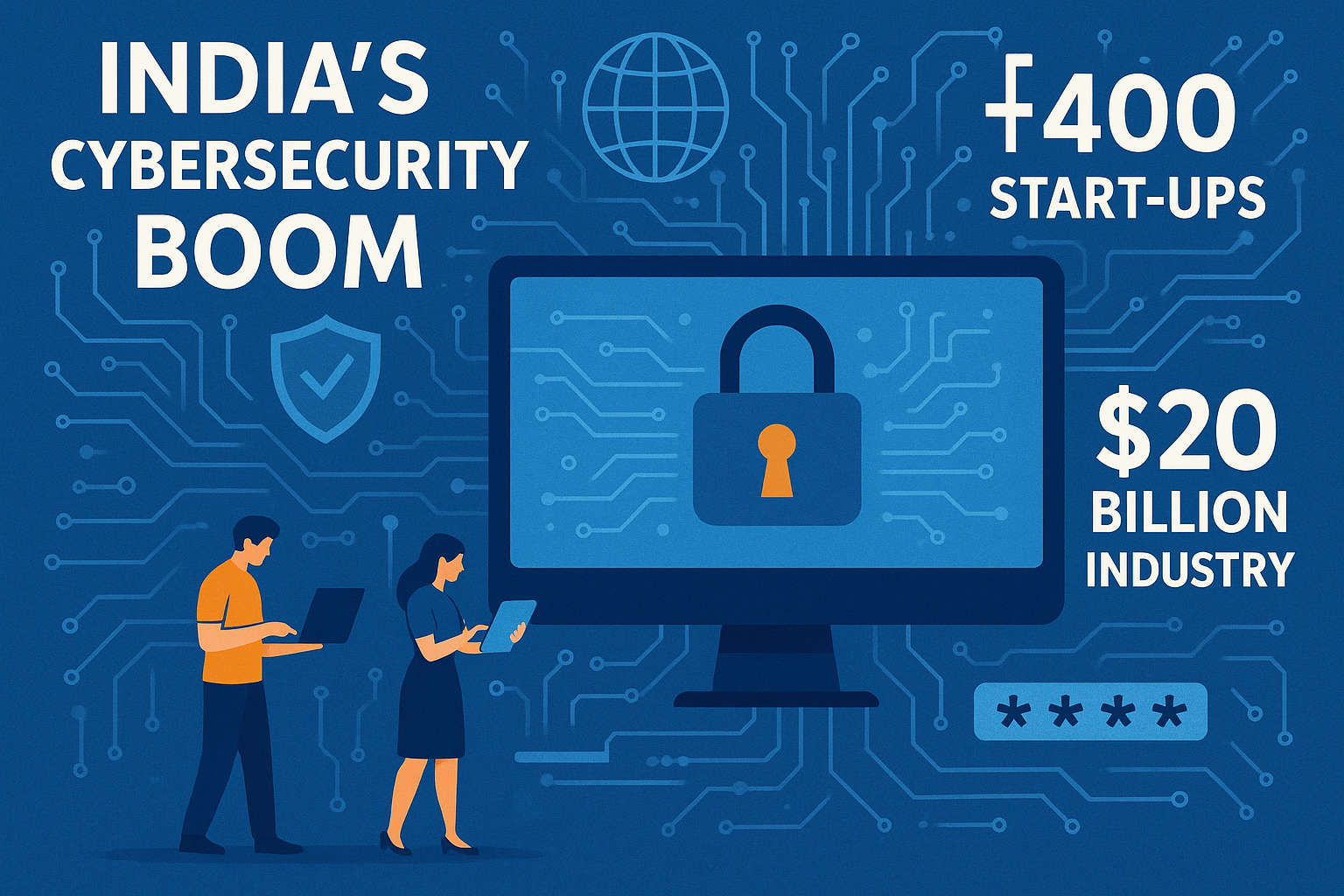
During an engaging discussion with a delegation of European Union journalists in New Delhi, Dr. Sanjay Bahl, Director General of CERT-In under the Ministry of Electronics and Information Technology, highlighted India’s rapid progress in cybersecurity. He noted that the ecosystem now includes more than 400 start-ups, employs over 6.5 lakh professionals, and has evolved into a robust 20-billion-dollar industry, reflecting India’s growing global prominence in digital security.
According to Dr. Bahl, these innovators are developing advanced solutions in areas like threat detection, cyber forensics, and AI-powered monitoring. This evolution marks a significant transition toward smarter, proactive, and intelligence-led cybersecurity frameworks.
Highlighting the evolving capabilities of CERT-In, Dr. Bahl stated that the organization is utilizing AI-based analytics and automation to detect, prevent, and counter cyber threats in real time. He cautioned that while AI enhances defensive strategies, it can equally be exploited for offensive purposes. This signals India’s transformation from a large consumer of cybersecurity products to a recognized contributor and innovator within the global cybersecurity ecosystem.
Moving past its traditional role of sending out advisories and alerts, CERT-In has embraced automation and real-time response mechanisms. By leveraging AI and analytics, it now plays a pivotal role in swiftly identifying, mitigating, and neutralizing cyber threats as they unfold.
CERT-In Transformed: Automating Cybersecurity for Instant Threat Response
India’s cybersecurity ecosystem now boasts more than 400 start-ups, signaling a robust and expanding innovation pipeline. Dr. Bahl noted that many of these emerging ventures are concentrating on niche domains like threat intelligence, forensic analysis, and AI-driven monitoring systems, contributing to the development of advanced security technologies.
The presence of a 6.5 lakh-strong workforce, coupled with structured institutional support for training and certification, highlights the maturity of India’s cybersecurity ecosystem. For investors and enterprises, this represents a crucial step toward establishing a self-sustaining domestic cyber tools supply chain.
CERT-In, as India’s national nodal agency, continues to play a vital role in vulnerability assessment, coordination, and cyber incident information sharing. Dr. Bahl’s recent comments mark a new direction—emphasizing AI-based analytics, automation, and resilience engineering. The official statement further clarifies that CERT-In now issues time-sensitive and specific advisories rather than generic alerts.
For enterprise technology leaders and start-ups alike, this transition means that future compliance will depend on their ability to leverage real-time threat intelligence, automation, and seamless integration with national cybersecurity frameworks.
Charting the Future Path
The insights shared by Dr. Bahl signify a milestone in India’s cybersecurity journey. The nation has transitioned from being a major consumer of international cybersecurity products to a creator of its own comprehensive ecosystem—comprising start-ups, expertise, and a coordinated national incident-response capacity. This represents more than a government announcement; it signals a structural shift in the digital landscape, creating opportunities for enterprises, investors, innovators, and professionals. As the sector matures, integrating with this expanding cybersecurity ecosystem may become a key strategic priority for growth and resilience in 2026 and the years ahead.