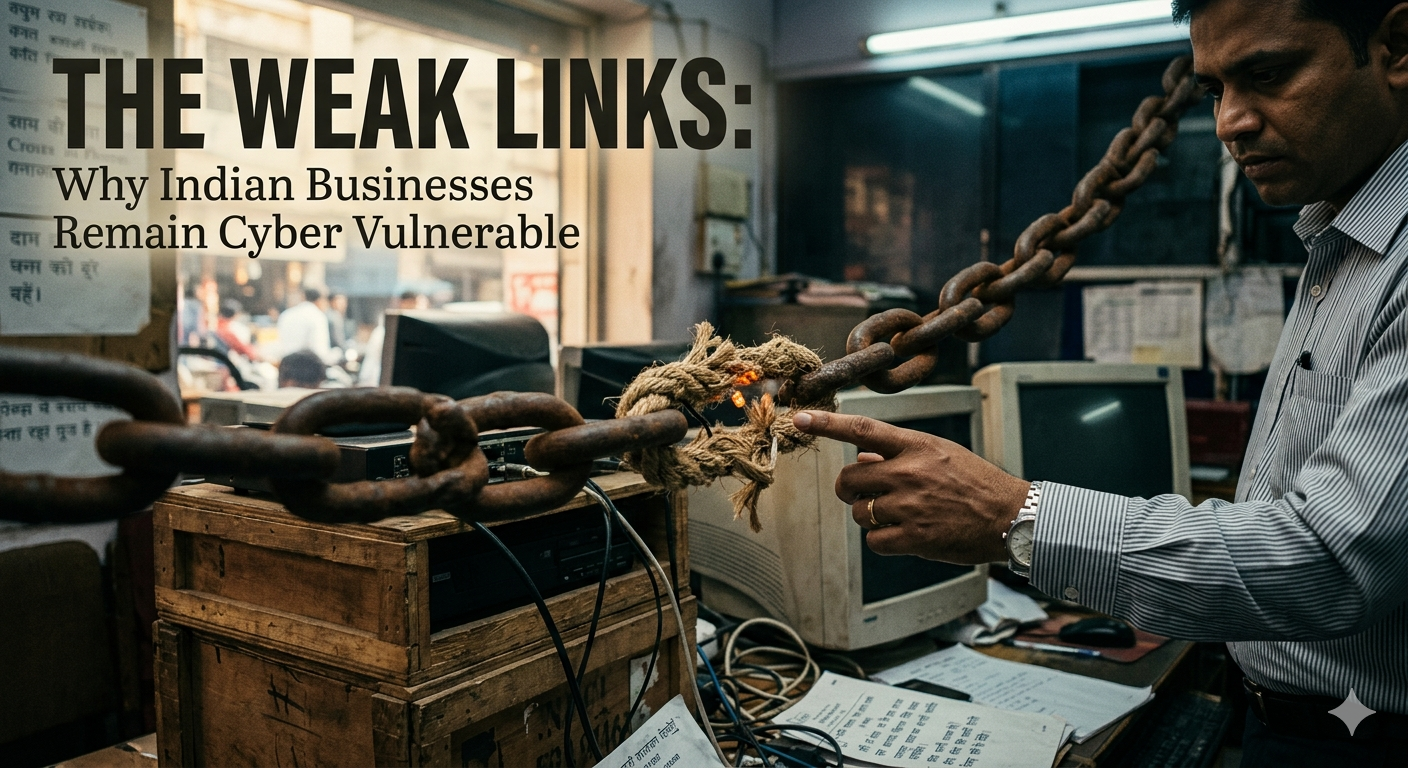
The Data Reveals a Harsh Reality
India's cybercrime landscape is not merely expanding—it is accelerating rapidly. Reported cases surged from 22.68 lakh in 2024 to 28.15 lakh in 2025, while financial losses crossed ₹22,495 crore in just one year. Adding to the concern, the number of complaints filed through the national cybercrime portal has grown by more than five times since 2021.
The way most breaches unfold is particularly significant. More than 50% of cyber incidents worldwide involve ransomware, and the leading cause is not a weakness in technology but human actions. Attackers are not overcoming sophisticated defences—they are taking advantage of opportunities created by open doors, whether through mistakes, oversight or negligence.
Why Indian Enterprises Struggle with Evolving Cyber Threats
The challenge for Indian enterprises lies in the complexity of their operations. Factories, branch offices and third-party vendor networks are tightly connected, yet security measures are often applied inconsistently across these environments. Legacy systems operating alongside cloud platforms create a patchwork of protection, where controls exist on paper but fail to provide comprehensive coverage. At the same time, many organisations mistake regulatory compliance for genuine security. Although the DPDP Act 2023 and CERT-In requirements have strengthened logging and incident reporting, documenting risks does not eliminate them. As a result, only 41% of Indian companies have reached a progressive stage of cybersecurity maturity, leaving the majority struggling to keep pace.
How Smart Enterprises Are Closing Their Security Gaps
The most security-aware enterprises are not relying on bigger technology budgets alone. Instead, they are improving their cybersecurity posture by asking smarter, more strategic questions.
Identity First: The New Approach to Cybersecurity: The focus has shifted from broad security assurances to access accountability. Instead of asking whether systems are protected, mature organisations want to know exactly who has access at any given moment and whether they still require it. The answer frequently uncovers dormant vendor accounts, privilege creep among employees, and temporary accounts created during urgent initiatives that were never properly removed.
Treating Email Security as a Business Priority: With AI powering nearly 80% of phishing campaigns, fake emails have become more convincing than ever before. When employees struggle to confidently identify whether a message is legitimate or malicious, human judgement becomes a security risk, making the workforce a potential entry point for attackers.
The Growing Importance of OT in Cybersecurity Planning: Manufacturing and pharma companies often assume that keeping OT environments separate from IT systems provides sufficient protection. In reality, attackers are quick to exploit any available connection. A single compromised vendor account in a supposedly isolated OT environment can enable lateral movement into production infrastructure. Practical security assessments have demonstrated that these gaps exist much more frequently than businesses tend to believe.
The First Step Isn't Another Tool
Instead of immediately looking for the next cybersecurity tool, start by assessing your current attack surface and identifying the exposures that may already be putting your organisation at risk.
Assess User Access Before It Becomes a Risk Conduct access audits using live system data instead of employee records alone. Real-time access reviews provide a clearer picture of who can access critical resources and whether those permissions are still appropriate.
Evaluate Every Third-Party Connection to Your Environment
Build Cyber Resilience Through Phishing Testing Employee awareness training is important, but it should be complemented with phishing simulations. Simulated attacks provide valuable insight into how staff react under realistic conditions and help identify areas where additional guidance is needed.
Integrating IT and OT Security Strategies IT and OT security should operate as a unified defence. Any lack of coordination or visibility between the two can leave vulnerabilities that increase the risk of cyber threats and operational disruption.