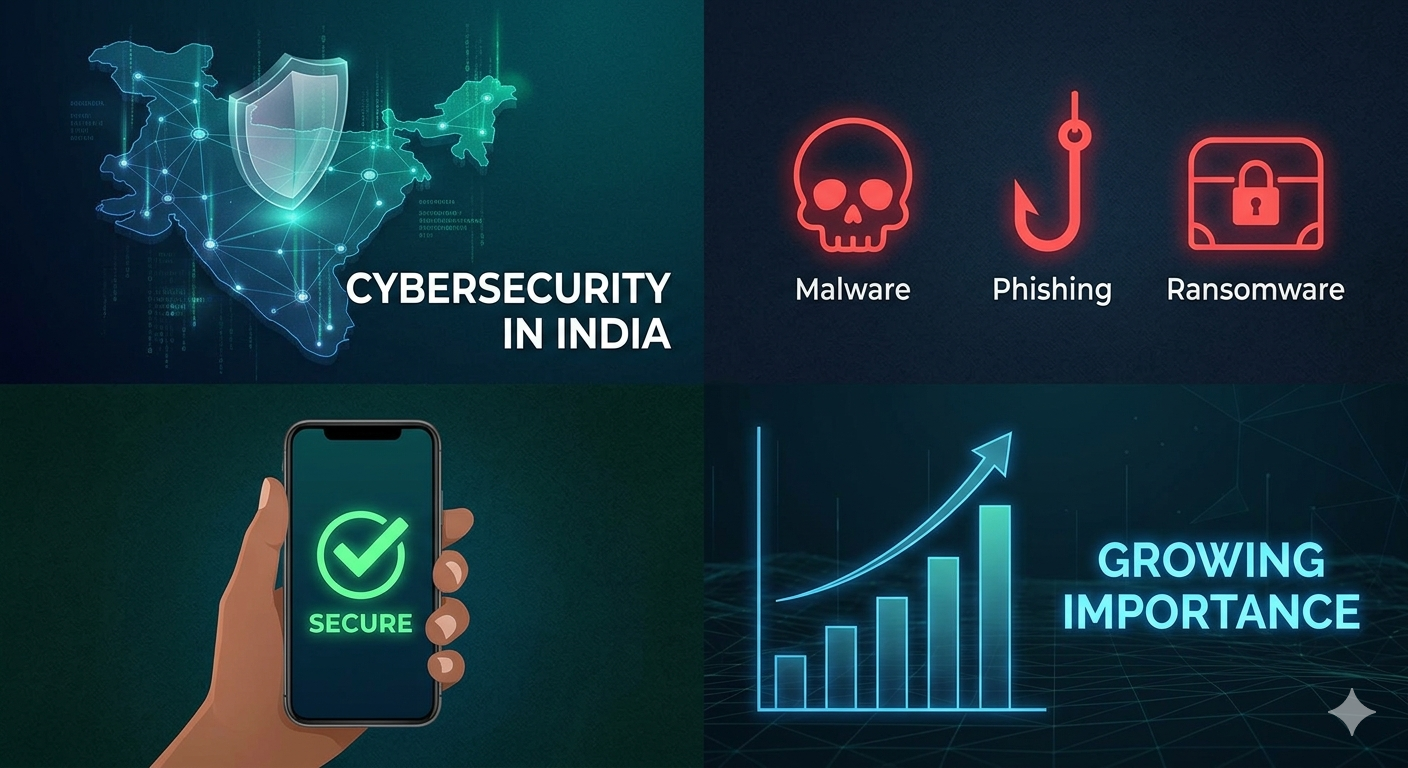
Cybersecurity is the practice of protecting digital systems, servers, networks, software, electronic devices, and data from cyber-attacks, unauthorised access, and malicious exploitation. It involves the use of advanced technologies, security processes, and regulatory frameworks to safeguard digital assets and maintain secure operations. With India rapidly embracing digital transformation and expanding internet usage, cyber threats have grown significantly across industries and public infrastructure. Factors such as low cybersecurity awareness, increasing online dependence, and weaknesses in Critical Information Infrastructure have made India vulnerable to a wide range of cyber risks. A report by CERT-In revealed that over 3.94 lakh cyber incidents were reported in India during 2020, reflecting a sharp 63% rise from the previous year. The reported incidents ranged from phishing and malware attacks to website breaches and ransomware campaigns, demonstrating the evolving scale and sophistication of cyber threats in the country.
Major Types of Cyber Threats Explained
Based on the motives and the nature of the perpetrators involved, cyber threats are generally divided into four major types:
Cybercrime: Cybercrime refers to illegal activities conducted through computer networks, where computers, servers, digital devices, or online systems may either become the target of the attack or be used as tools to carry out criminal operations.
Cyber-espionage: Cyber-espionage is the practice of infiltrating computer networks and digital infrastructure to illegally obtain confidential information from targeted systems and servers. It is commonly directed at government organisations, defence agencies, and critical sectors to extract classified or strategically important information. Such attacks are usually sophisticated and covert in nature, enabling threat actors to monitor activities, steal intelligence, and compromise national security-related information without detection.
Cyberwarfare: Cyberwarfare is the practice of using cyber operations and digital networks to launch attacks against other countries as part of strategic or military conflict. Such attacks can involve activities like DDoS attacks, website defacement, disruption of communication systems, and targeting critical digital infrastructure. With the growing dependence on technology, cyberspace has emerged as the fifth dimension of warfare alongside land, ocean, air, and space. Today, over 140 nations are investing in the development of cyberwarfare technologies, strategies, and specialised capabilities to strengthen their national security and defence preparedness.
Cyberterrorism: Cyberterrorism involves conducting cyber-attacks through digital networks to achieve the political goals of terrorist organisations and spread fear among the masses. Governments, defence systems, and critical national infrastructure are often the primary targets of such operations. The objective is usually to disrupt essential services, compromise strategic information, and weaken national security mechanisms. Cyberterrorists commonly use techniques such as denial-of-service attacks, network destruction, and data theft or exfiltration to inflict damage and create widespread instability.
The Growing Need for Cybersecurity in India
Among the major modern-day security concerns, cyber threats have become critically important for India due to their impact on economic stability, governance, public services, and critical infrastructure. Cyber-attacks are capable of causing widespread disruption, damaging institutional trust, and affecting the overall social and economic order of the country. With increasing digitalisation across sectors, vulnerabilities within networks and systems have also expanded, making cybersecurity a national priority. Robust cybersecurity frameworks are therefore necessary to safeguard data, maintain operational continuity, and protect the country from evolving cyber risks. The following points highlight the major reasons why cybersecurity is needed in India:
Nature of Cyberthreat: One of the most concerning aspects of cyber threats is their anonymous and concealed nature, which makes them difficult to identify, trace, and investigate effectively. Cyber attackers can operate remotely from anywhere in the world while masking their identities and methods. These attacks are often low-cost and easy to carry out, allowing even small groups or individuals to launch significant disruptions.
The Evolving Nature of Cyber Threats: The nature of cyber threats is rapidly evolving as cybercriminals embrace highly inventive and technologically advanced attack methods.
The Rise of Ransomware-as-a-Service (RaaS)
The Growing Threat of Cybercrime-as-a-Service
Rising Concerns Over the Misuse of AI
Growing Levels of Cyber Vulnerability: The inadequate protection of Critical Information Infrastructure (CII) and government computer systems has made them attractive targets for cybercriminals and malicious actors. Weak security measures, outdated systems, and rising digital dependence have increased the vulnerability of essential public infrastructure to cyber threats. The 2022 ransomware attack on AIIMS demonstrated the seriousness of this challenge, as the incident affected a substantial amount of sensitive patient information and disrupted healthcare operations.
Exploitation of Cyberspace by Terror Organisations: The methods used by cyber terrorists closely resemble traditional cyberattack techniques, enabling them to infiltrate systems and spread fear through digital disruption. Common tactics include DDoS attacks to overwhelm networks, malware to compromise systems, social engineering to manipulate individuals, and phishing attacks to steal confidential information.
Cybersecurity Challenges in Public Service Delivery: The increasing digitalisation of public services has made sectors such as transportation, defence, banking, communications, and energy more vulnerable to cyber-attacks. Cyber incidents targeting these systems can lead to large-scale operational disruptions and compromise essential public services.
Rising Cyber Warfare Threats Against India: The 2023 India Threat Landscape Report revealed a significant rise in state-sponsored cyberattacks against India, with incidents increasing by 278% between 2021 and 2023. Among the most targeted sectors was the service industry, especially IT and BPO organisations, which faced the largest share of cyber threats.