
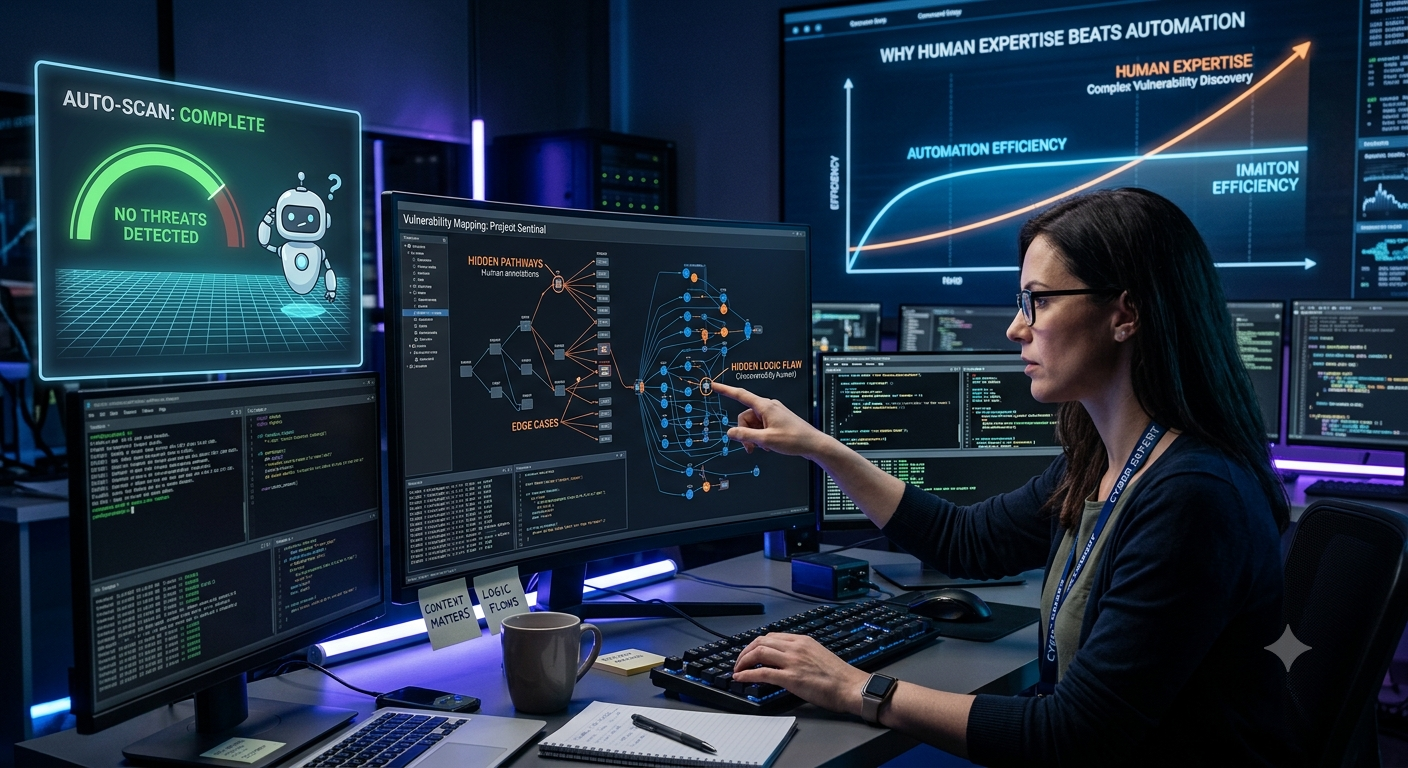
Modern software development demands rapid releases, making automated security testing a critical part of every cybersecurity strategy. Automated tools improve vulnerability detection, expand testing coverage, and help organisations embed security within DevSecOps and continuous integration/continuous deployment (CI/CD) processes. Yet automation cannot fully replicate human reasoning or anticipate every user interaction. Manual security testing remains indispensable because it verifies automated results, identifies sophisticated attack paths, and discovers vulnerabilities beyond the reach of automated scanners. Together, manual and automated testing provide stronger cyber resilience and a more complete view of security risk.
Automated Security Testing
Modern organisations rely on automated security testing to keep pace with rapid software development across web, mobile, API, and cloud environments. Continuous testing after every release enables faster vulnerability detection, while consistent and repeatable results help development teams resolve security flaws before deployment, improving application security, reducing costs, and strengthening overall cyber resilience.
The Hidden Cyber Threats Automated Security Testing Often Misses
Automated security scanners excel at finding technical flaws but struggle with vulnerabilities rooted in business processes and application logic. They can verify secure payment pages and validated inputs, yet often miss attacks involving manipulated APIs or unauthorised workflow changes, such as bypassing financial approvals. Because these are business logic vulnerabilities, they require manual penetration testing by skilled security experts who understand how real attackers exploit application behaviour.
Why Manual Penetration Testing Finds the Vulnerabilities Automation Misses
Finding business logic flaws requires more than automated security tools—it demands the mindset of an experienced penetration tester. Manual pentesting identifies vulnerabilities hidden within API interactions, session handling, access controls, and complex workflows that scanners often overlook. Relying solely on automated testing can create a dangerous false sense of security, leaving exploitable weaknesses undiscovered until attackers find them first.
Can You Trust Automation Alone? Why Manual Testing Still Matters
While automation accelerates security testing and strengthens vulnerability detection, only manual testing can evaluate business logic, attacker behaviour, and real-world risks.
1) Why Finding Vulnerabilities Isn't Enough: Understanding Real Security Risk
Effective vulnerability assessment requires confirming that reported issues are genuinely exploitable. By validating application behaviour, examining evidence, and evaluating business impact, security analysts deliver reliable findings, enabling developers to prioritise real risks and avoid unnecessary fixes.
2) The Security Gaps Only Human Testers Can Uncover
While automated tools identify common vulnerabilities, manual security testing goes further by analysing real-world attack scenarios. Skilled testers can detect:
- Broken access controls
- Business logic vulnerabilities
- Privilege escalation opportunities
- Authentication bypasses
- API security flaws
- Multi-stage attack chains
3) Why Human Expertise Is Essential for Prioritising Real Cybersecurity Risks
A vulnerability affecting a customer-facing banking application is far more critical than one on a low-risk marketing website. Manual penetration testing helps distinguish these differences by assessing:
- Data sensitivity
- Business process impact
- Exploitability
- Financial consequences
- Regulatory risks
Why the Best Cybersecurity Strategies Combine Automation with Human Expertise
The most effective cybersecurity programmes combine automated security testing with manual validation to maximise both speed and accuracy. A typical security workflow includes:
- Automated scanning to identify vulnerabilities.
- Prioritisation of findings based on risk.
- Manual validation of critical issues.
- Assessment of business impact.
- Clear remediation guidance for developers.
- Verification after fixes are implemented.
- Continuous automated monitoring for new threats.