
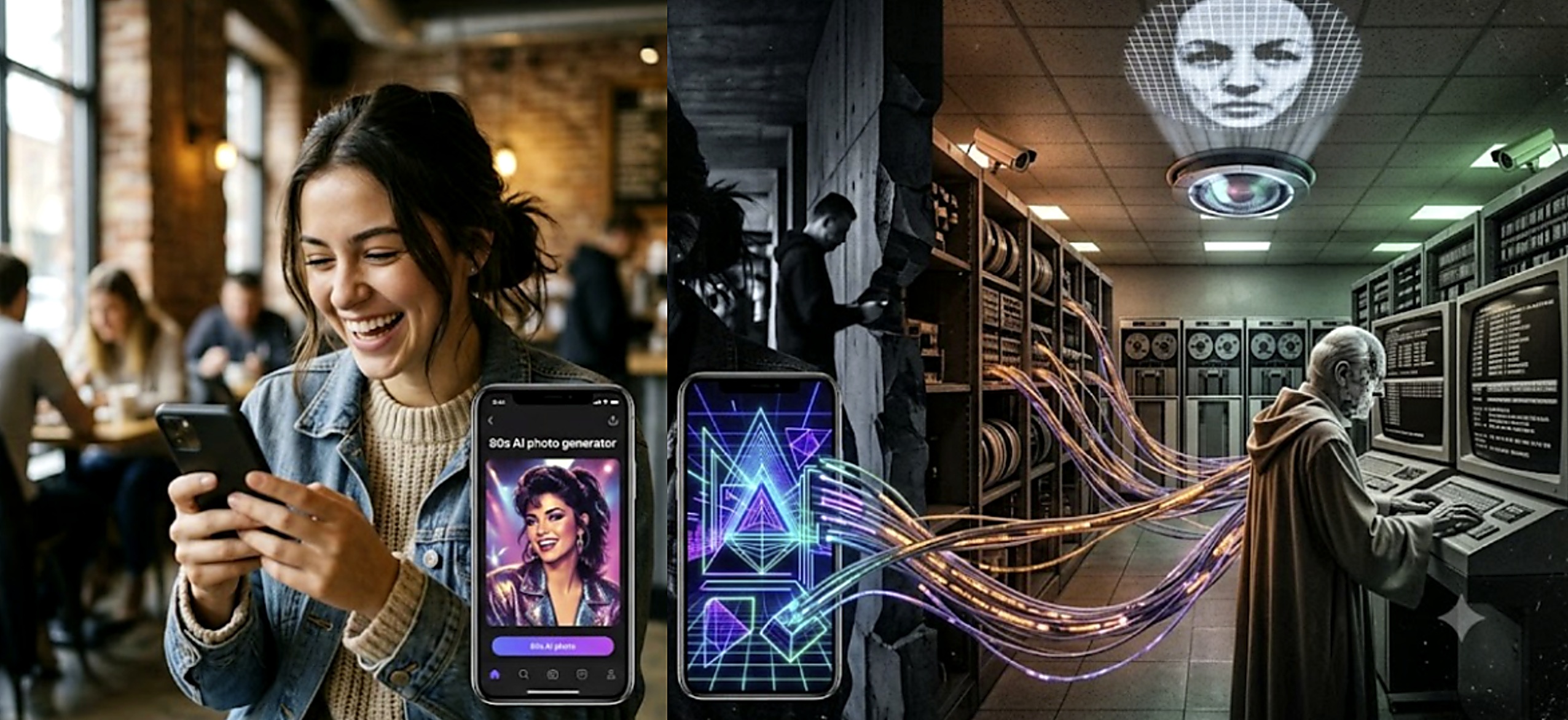
The viral 80s AI photo trend looks harmless: upload a photograph, give an AI tool a prompt, and watch your modern portrait become a retro-style image. But behind the nostalgia sits a real cybersecurity question — what happens to your personal data after you upload your face?
A photograph is more than pixels. It can identify, profile, or authenticate a person. Once uploaded to an AI platform, that image becomes digital data governed by that platform's privacy, storage, and data-use policies. OpenAI, for example, states that content from individual ChatGPT services may be used to improve its models unless the user opts out.
Your FACE Becomes A Long-Term Digital Identifier
Unlike a password, your face can't be replaced after a breach. A high-resolution photograph can be analysed for facial characteristics, age estimates, and other visual attributes.
The risk grows with repetition. Every additional photograph uploaded over time builds a richer picture of someone's appearance, lifestyle, and online identity.
The INFORMATION HIDING In The Background
Most people focus on the person in the photo and overlook everything around them. A single innocent-looking image can reveal:
- A distinctive home interior or workplace
- Vehicle details or other identifying objects
- Family members appearing in the background
- Badges, screens, or documents visible by accident
- Clues about where and when the photograph was taken
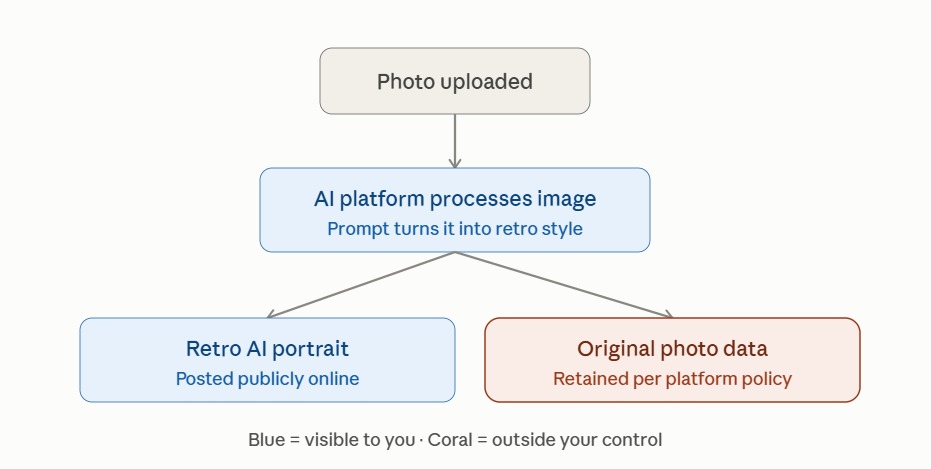
And even after the AI-generated version gets posted publicly, the original uploaded file may still be processed or retained separately, governed by the platform's own policies — ChatGPT, for instance, offers account-level controls for model-training use and a Temporary Chat mode.
The Real CYBERSECURITY Concern
The danger isn't that every uploaded photograph gets stolen or misused. The danger is loss of control. Once sensitive visual data leaves your device, you're relying entirely on another organisation's security practices, retention policies, and judgment.
A compromised account, unauthorised access, or future misuse of exposed personal data can create consequences that outlast a single viral post by years.
THINK Before You UPLOAD
Before joining the next AI image trend, ask whether the transformation is worth surrendering an identifiable photograph. Avoid images that reveal more than your face, check the platform's privacy and training controls before uploading, and choose a lower-risk photograph over one that exposes your home, workplace, or surroundings.
AI creativity is entertaining — but your face is personal data, not just content for the next viral trend.