
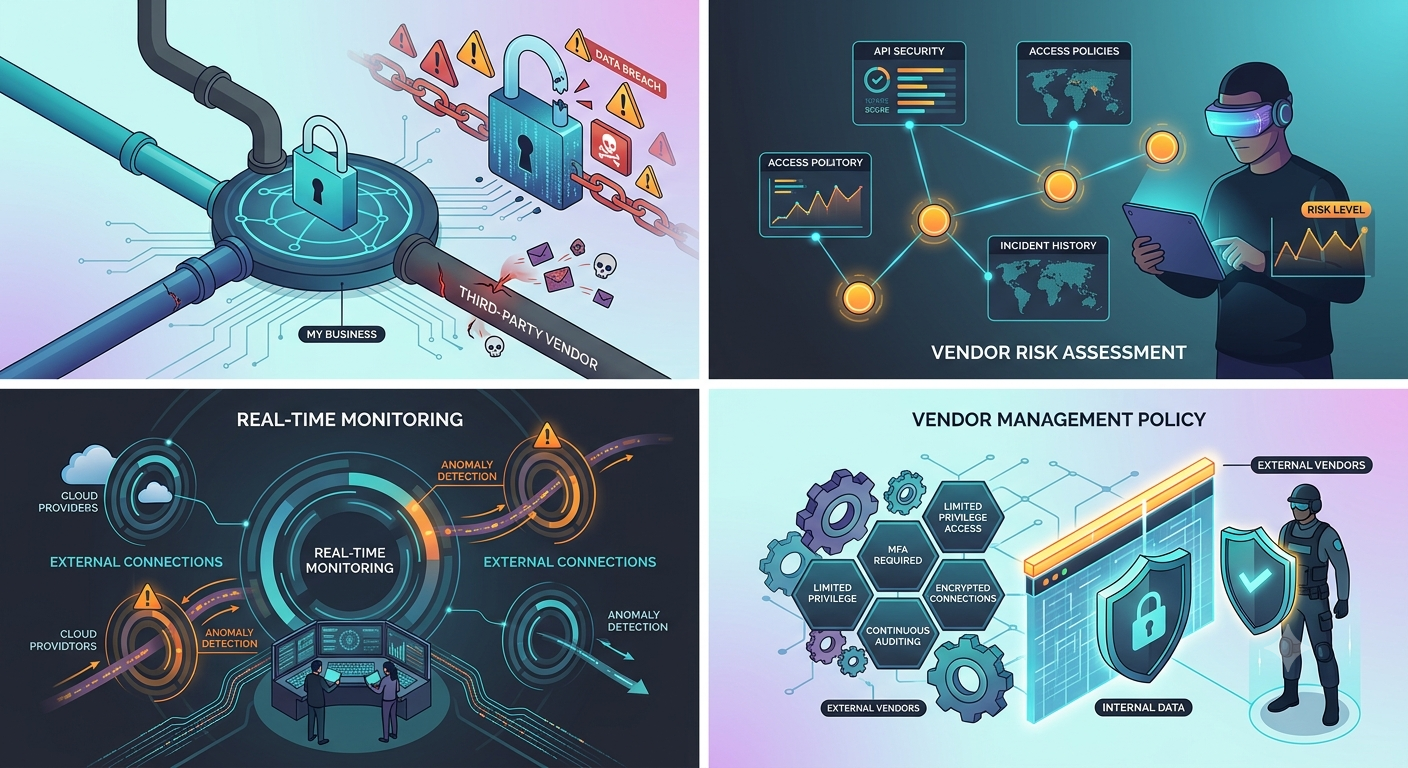
A small business might depend on Google Workspace for collaboration, Stripe for payments, HubSpot for customer management, and Slack for team communication. You can secure your own devices and enforce MFA, but vulnerabilities at any connected provider may create an unexpected entry point. This is the growing reality of supply chain cybersecurity risk, affecting businesses of every size—not only large corporations.
Supply Chain Cyber Risk Explained
Your organisation's cybersecurity extends beyond its own network. Every third-party vendor, supplier, and digital service you rely on—from payment processing and email marketing to inventory and shipping platforms—can introduce security risks. Attackers often exploit weaker suppliers instead of targeting well-protected organisations directly. A compromised vendor can provide access to multiple connected businesses, making supply chain cybersecurity a critical priority for both enterprises and growing SMBs.
Why Supply Chain Cyber Attacks Are Exploding
Supply chain cyber attacks are becoming increasingly attractive because modern businesses depend heavily on interconnected technologies. The risk continues to grow because:
- More third-party connections: SaaS applications, APIs, plugins, and cloud platforms create numerous external access points.
- Security gaps among vendors: Smaller providers may lack the resources and expertise of large enterprises.
- Scale of potential attacks: Breaching one popular software provider can give attackers opportunities to compromise many customers simultaneously.
- Poor integration oversight: Businesses frequently adopt new technologies faster than they assess them, while older connections can remain forgotten and vulnerable.
A strong third-party cybersecurity strategy requires organisations to understand, assess, control, and continuously monitor their supply-chain relationships. The first step is creating a complete inventory of every vendor, application, plugin, API, integration, and service provider that can interact with your systems or sensitive information.
For each supplier, determine:
- What information can they access?
- What permissions have been granted?
- Which systems are connected?
- What would be the operational impact of a vendor breach?
Next, perform vendor security assessments before signing contracts. Examine privacy policies, security documentation, previous incidents, and evidence of appropriate data protection practices.
Businesses should then implement Zero Trust principles. Never assume a supplier is trustworthy simply because it has an established relationship with your organisation. Verify connections, minimise permissions, and periodically review access. A vendor requiring limited data access should never receive unnecessary administrative privileges.
Because suppliers present different levels of exposure, establish a vendor risk classification system. Categorise third parties as critical, high, medium, or low risk, then align security requirements and monitoring frequency with their risk level. This enables small businesses to focus limited resources where they matter most.
Most importantly, vendor security cannot end after onboarding. Continuous monitoring helps identify changes such as new services, subcontractors, vulnerabilities, or security incidents. Critical suppliers should ideally be reviewed at least quarterly.
This combination of inventory, due diligence, Zero Trust, risk tiering, and continuous monitoring creates a stronger and more resilient supply chain cybersecurity framework.